
Mashable.
Roman Space Telescope launch today: Livestream details, when to watch

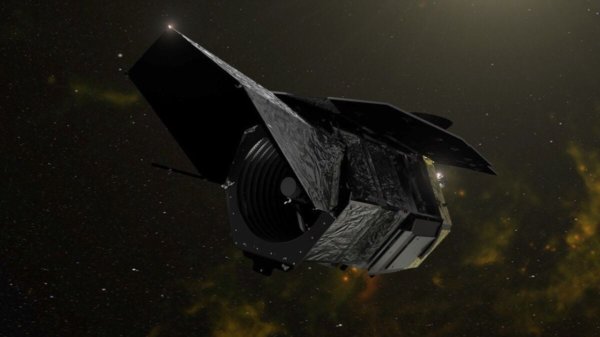
If the weather plays nice, NASA plans to launch its next flagship space observatory today, and viewers can watch the coverage live online from home.
NASA and SpaceX are targeting the launch of the Nancy Grace Roman Space Telescope no earlier than 7:26 a.m. ET on Aug. 30 at the Kennedy Space Center in Cape Canaveral, Florida. The infrared telescope's ride, a SpaceX Falcon Heavy rocket, will lift off from the historic Launch Complex 39A pad, the same that sent Apollo 11 and the maiden voyage of the Space Shuttle into orbit.
Play our Big Guessing Game: Make your predictions now for a chance to win a new Apple Watch. Time's running out!
Roman, with a lifecycle cost of about $4.3 billion, combines Hubble-like sharpness with a field of view at least 100 times larger, allowing scientists to map billions of galaxies, probe dark energy and dark matter, and discover exoplanets at an unprecedented scale.
You May Also Like
The telescope sees the universe in infrared light, which human eyes cannot see. Its wide surveys let astronomers track how structures, such as stars, galaxies, and galaxy clusters, grow over time, as well as measure how the universe expands.
Mission planners expect Roman images from a major survey to include more than 2 billion galaxies and, over time, reveal tens of thousands of supernova explosions and many new planets.
On launch day, NASA plans a full suite of coverage. The U.S. space agency will stream commentary and views of the rocket on NASA TV and its Youtube channel, beginning at 6:20 a.m. ET on Sunday, Aug. 30. Simultaneously, viewers can monitor live updates on the Roman launch blog.
Or, you can bookmark this story, and watch the event unfold live at the broadcast below:
Members of the public can also sign up to be "virtual guests" of the launch. The program sends launch information, notices about schedule changes, and a digital stamp for the NASA virtual guest passport afterward.
As the launch provider, SpaceX also plans to provide live launch coverage from its website and on X, the social platform also owned by SpaceX founder Elon Musk.
Want more science and tech news delivered straight to your inbox? Sign up for Mashable's Light Speed newsletter or get Mashable push alerts today.
After separation from the rocket, Roman heads for the second sun–Earth Lagrange point, or L2, about 1 million miles away from Earth. This is also the James Webb Space Telescope's home. From there, the mission teams plan a five-year primary science phase, with a goal of operating for 10 years.
Each launch window for the mission is instantaneous, meaning the rocket must lift off at an exact second. Even a minor delay on the launch pad requires a complete cancellation for the day. That strict time constraint is based on orbital geometry and physics.
If for any reason NASA must postpone or scrub the launch, there is a backup opportunity at 7:22 a.m. ET on Monday, Aug. 31.
Elisha Sauers writes about space for Mashable, taking deep dives into NASA's moon and Mars missions, chatting up astronauts and history-making discoverers, and jetting above the clouds. Through 17 years of reporting, she's covered a variety of topics, including health, business, and government, with a penchant for public records requests. She previously worked for The Virginian-Pilot in Norfolk, Virginia, and The Capital in Annapolis, Maryland. Her work has earned numerous state awards, including the Virginia Press Association's top honor, Best in Show, and national recognition for narrative storytelling. For each year she has covered space, Sauers has won National Headliner Awards, including first place for her Sex in Space series. Send space tips and story ideas to [email protected] or text 443-684-2489. Follow her on X at @elishasauers.


0 Yorumlar
Yorum ekle